FemTech Leeds launch
Bringing together a community focused on driving change in women’s health
FemTech Leeds launched on 1 October during Leeds Digital Festival, bringing together a community focused on driving change in women’s health.
The session brought together lived experience, practical insight and honest discussion, exploring both the barriers holding the sector back and the opportunities to build something better, in the region and beyond.
Opening remarks
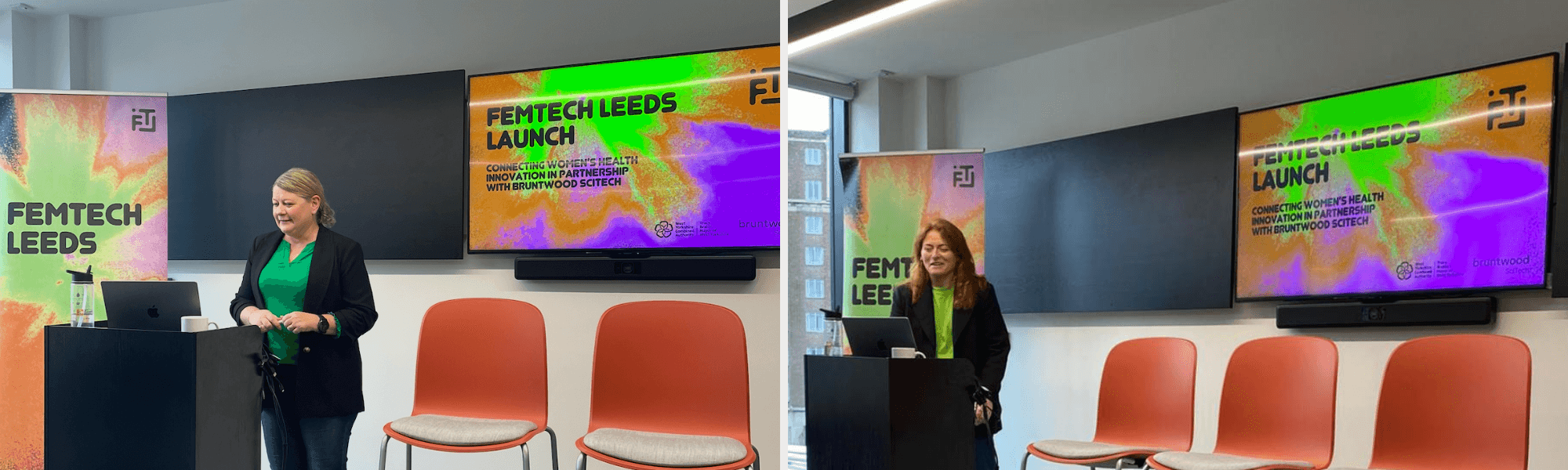
The event opened with Katherine Megson, head of innovation at Bruntwood SciTech, who set the tone by reminding the audience that Bruntwood is about much more than buildings. It is about building ecosystems where innovation can thrive.
She spoke about the Female Founders Incubator, which has supported three cohorts of women, many in healthtech, and her experience of the challenges female founders face.
Katherine asked the audience how many had ever felt dismissed at the GP or told to “just put up with it because you are a woman.” Almost every hand went up.
This collective response captured exactly why femtech is growing and why FemTech Leeds exists.
“This community represents change, innovation, and the refusal to accept the status quo in women’s health.” Katherine Megson
Introducing FemTech Leeds
Tiffany Mazza, coordinator of FemTech Leeds, then introduced the network and its mission.
She explained that FemTech Leeds is a grassroots network for women’s health innovation, a space to connect founders, amplify solutions, and build the support that has been missing. The network is built on three pillars: amplify founders, create community, and raise awareness.
Tiffany highlighted stark inequalities: less than 3 percent of global digital health investment goes to femtech; women founders in the UK receive just 2 percent of venture capital; endometriosis takes more than eight years to diagnose; and most GPs report little or no training in menopause care.
Survey results from local women’s groups confirmed that these issues are not widely understood. Ninety-two percent of respondents said they did not learn enough about women’s health at school, and only one in ten could recognise female heart attack symptoms.
“Most women only start to dig deeper into their health once they are already facing a problem. That is a systemic failure in education and awareness.”
Despite these challenges, Tiffany emphasised that women are creating solutions, from wearables to VR therapy to AI-driven health platforms. FemTech Leeds will give them the visibility, community, and connections they need to thrive.
“FemTech Leeds is a grassroots network for women’s health innovation, a space to connect founders, amplify solutions, and build the support that has been missing in this sector.”
Innovating menopause care: Amy Wild, Silvia Health
Amy Wild, founder of Silvia Health, presented her solution to one of healthcare’s biggest gaps: menopause. With only 62 certified menopause GPs for 13 million women, and consultations lasting up to an hour, capacity is a huge challenge.
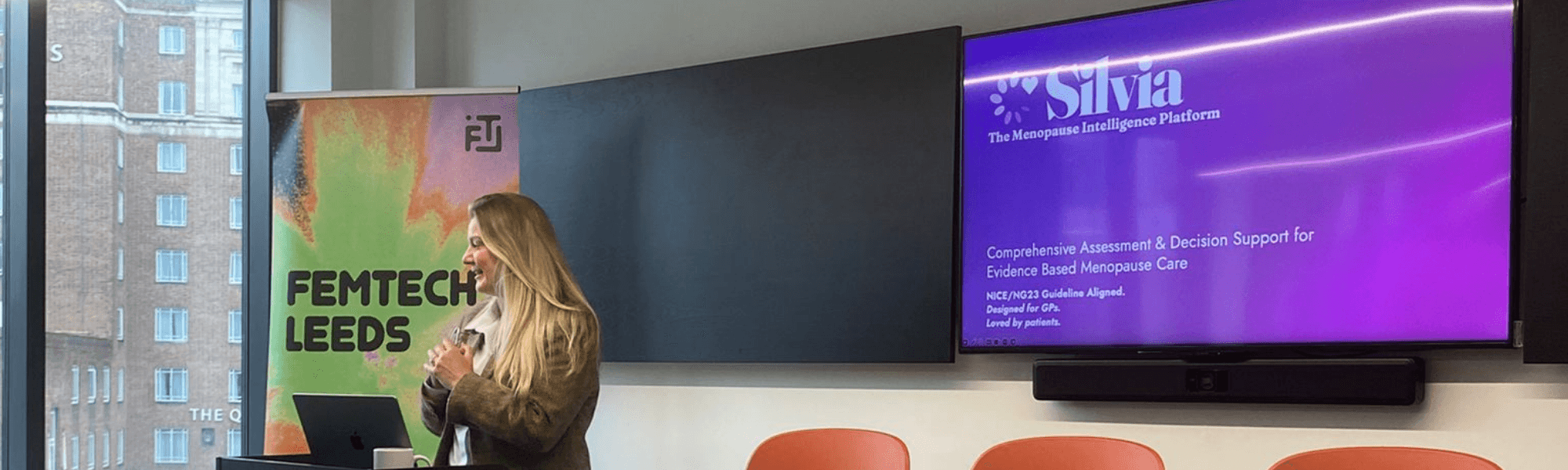
Amy’s innovation, Silvia, streamlines the consultation process. Patients complete a ten minute structured assessment, which flags urgent risks and generates a clear GP summary. This reduces the number of appointments needed and allows doctors to spend time on treatment rather than gathering information.
Silvia also provides personalised educational resources and symptom tracking, giving women the tools to manage their health and share accurate data with their clinicians.
“Menopause consultations take up to an hour, but with Silvia, a GP can walk in with a full report already in hand. That means fewer wasted appointments and faster access to treatment.”
Amy closed by sharing that the team at Silvia is now preparing for an investment raise to scale the solution.
“There are only 62 certified menopause specialists in the whole of the UK for 13 million women, that is inconceivable. We built Silvia to ease that capacity problem.”
Survivor-led innovation: Amanda Haigh, Fix Your Future and UKind Therapy CIC
Amanda Haigh shared her journey from advocacy work into building survivor-led technology. After her own lived experiences of abuse, she was determined to create solutions that could break down barriers to therapy.
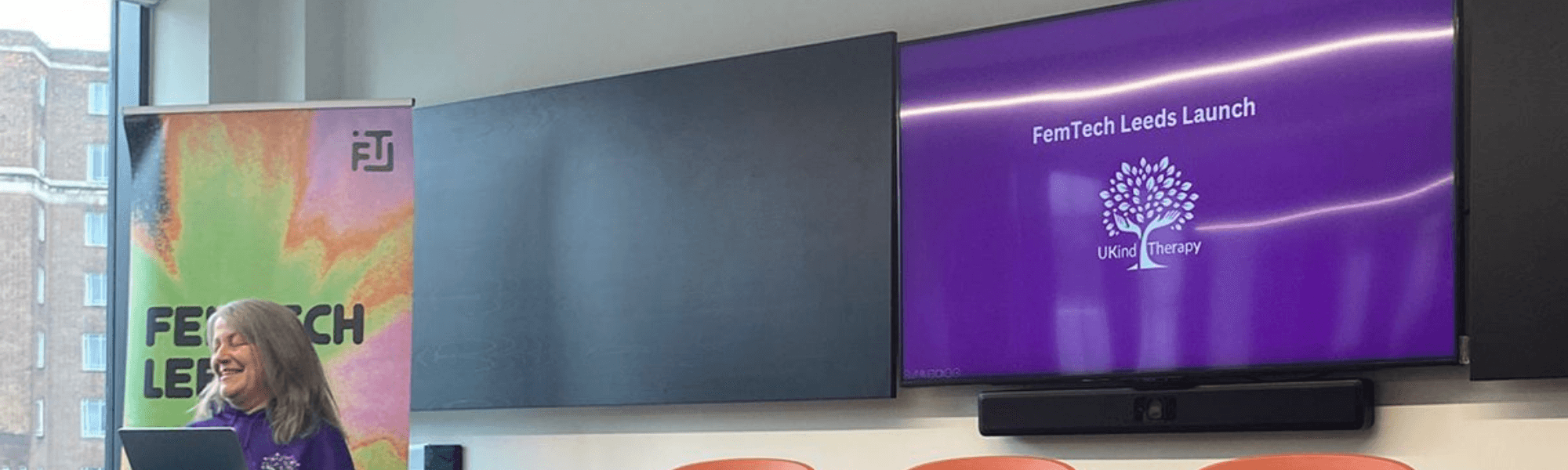
Her organisation, Fix Your Future, developed UKind XR, a virtual reality therapy platform that reduces wait times by giving survivors immediate access to safe, trauma-informed support. Survivors choose their therapist avatar and can speak openly in VR without fear of judgment. Early trials showed strong results: participants reported being able to take off their “mask” and express themselves freely.
“In our Phase One research, survivors spoke more freely in VR because there was no judgment, no fear. They finally felt able to say what they needed to say.”
Amanda was candid about the challenges: bootstrapping with her pension, navigating complex IP agreements, and facing endless “no’s” from funders. But accelerators, networks, and unexpected allies kept her moving forward, including a developer who built her first MVP for free.
She closed by inviting attendees to her upcoming Bridging the Gap in Therapy conference at Nexus, which brings together academics, survivor voices, and community leaders.
“We built UKind XR to bridge the gap, so survivors do not have to wait months or years to get the therapy they need.”
Tackling neurodivergent and hormonal health: Carly Walter, Magi and Wellbeing Reimagined
Carly Walter spoke about her journey with ADHD and PMDD, and the years of burnout and misdiagnosis that came with trying to fit into systems not designed for women like her.
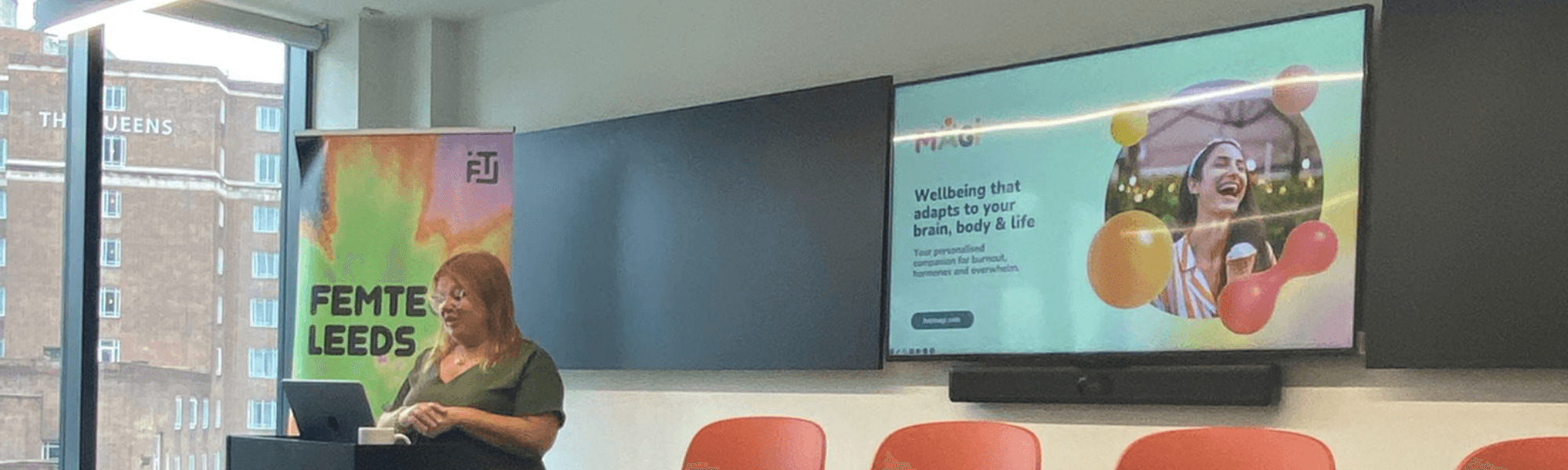
This lived experience led her to build MAGI, a wellbeing platform for women and girls navigating burnout, hormones and overwhelm. Co-designed with women facing these challenges, MAGI leverages AI to capture real-world data, strip out biases, and provide personalised support.
“We cannot wait 10 or 20 years for the system to catch up. For women’s health, AI is our shortcut.”
Carly stressed that innovation is possible even without a tech background, if founders can access accelerators, build strong advisory boards, and collaborate with universities. She described MAGI, as a “pocket vest” for women’s health, a tool to regulate emotions, reduce overwhelm, track symptoms, and prevent crisis points.
“It is not a niche, it is a revolution. Women have been failed for too long, and we do not have decades to wait.”
Panel discussion: funding, collaboration, and systemic change
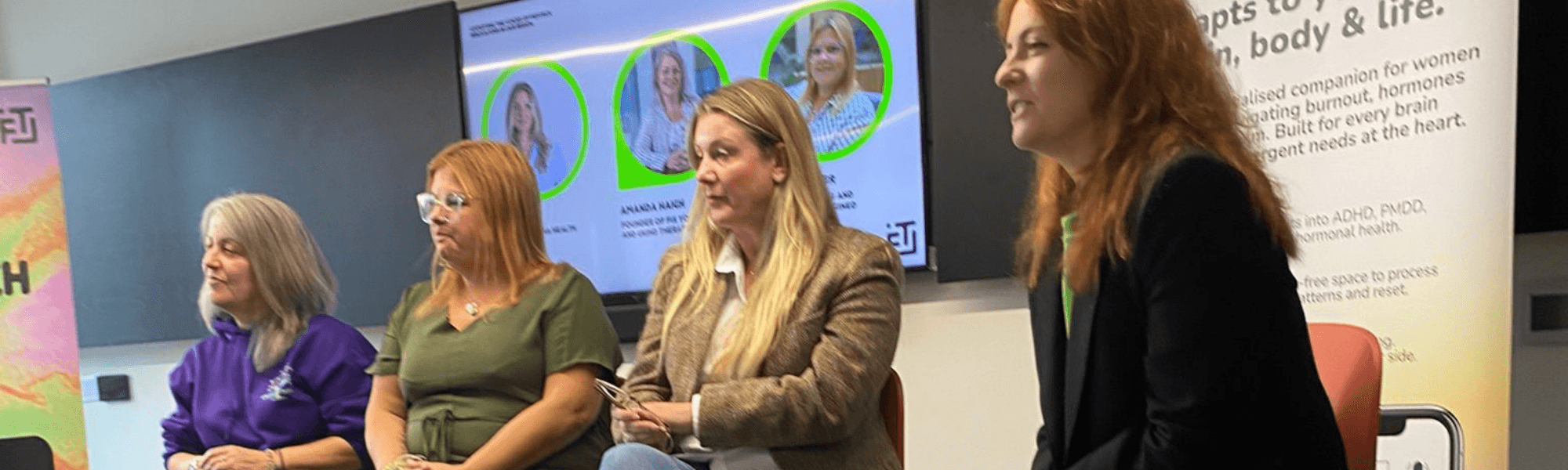
After the presentations, the three founders joined Tiffany Mazza for a panel discussion and audience Q and A.
Early-stage grants and investment
Amanda highlighted how the Health Inequality Challenge gave her start-up a crucial lifeline. Carly emphasised the need for grants tied to impact reporting but accessible enough to help founders reach proof of concept.
“Accessible, early-stage funding is the difference between proving your concept or running out of steam.”
NHS and private health collaborations
Carly described the difficulties of securing pilot sites within the NHS, while Amanda noted that some innovators are now looking abroad to avoid the slow process. Amy added that founders need to understand NHS metrics and demonstrate value in the system’s own terms.
“The NHS is the holy grail, but it is a long road. Starting with private practices can prove value and keep things moving.”
Data, ethics, and advisory boards
A question from the audience asked about patient trust in data sharing. Carly stressed the importance of transparency and ethical design, pointing to her work with DigiSafe. She and Amanda also spoke about the importance of advisory boards, for credibility, expertise, and guidance in the early stages.
“Ethical, inclusive data is the foundation of trust in femtech. Get it right from the start.”
Legal and investment strategy
A question from the audience asked about key legal risks for femtech start-ups. Amanda and Carly underscored the importance of IP strategy and warned of pitfalls with early-stage investment. They recommended using accelerators to access pro bono legal support.
“Get your IP right from day one, it is painful and expensive to fix later.”
The panel closed with practical advice on building advisory boards, seeking ethical investment, and using networks like FemTech Leeds to keep these conversations alive.
Links and resources
Stay connected with FemTech Leeds
Join our mailing list for updates direct to your inbox
Follow FemTech Leeds on LinkedIn and Instagram
Links and resources page
Speakers and their work
Amanda Haigh
Fix Your Future and UKind Therapy CIC
Amy Wild
Silvia Health UK
Carly Walter
MAGI and Wellbeing Reimagined